COURSE ACTIVITIES

Learning fundamentals of microbial oceanography & rehearsal for the cruise

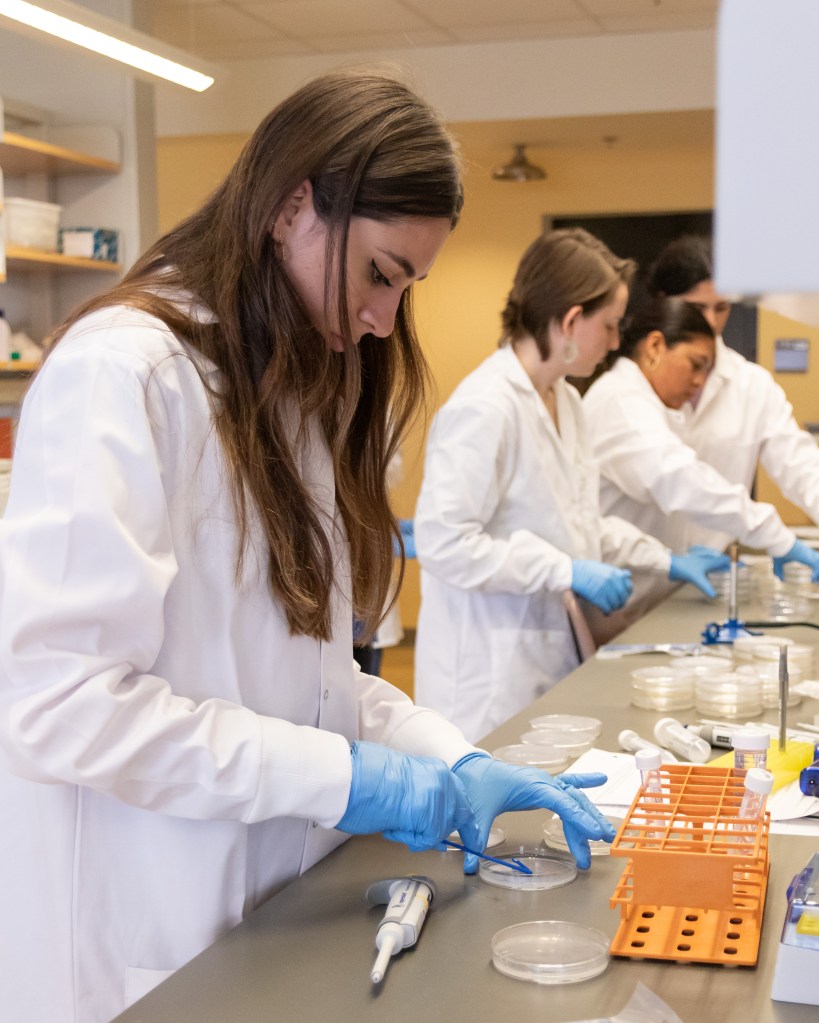
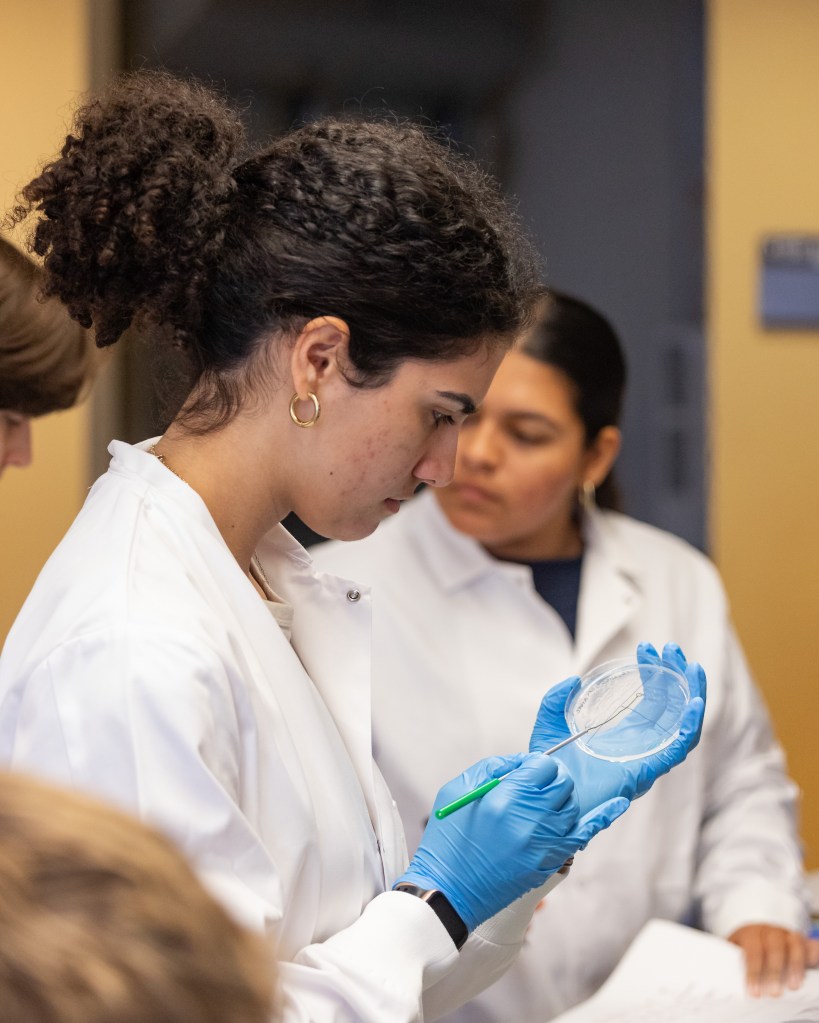
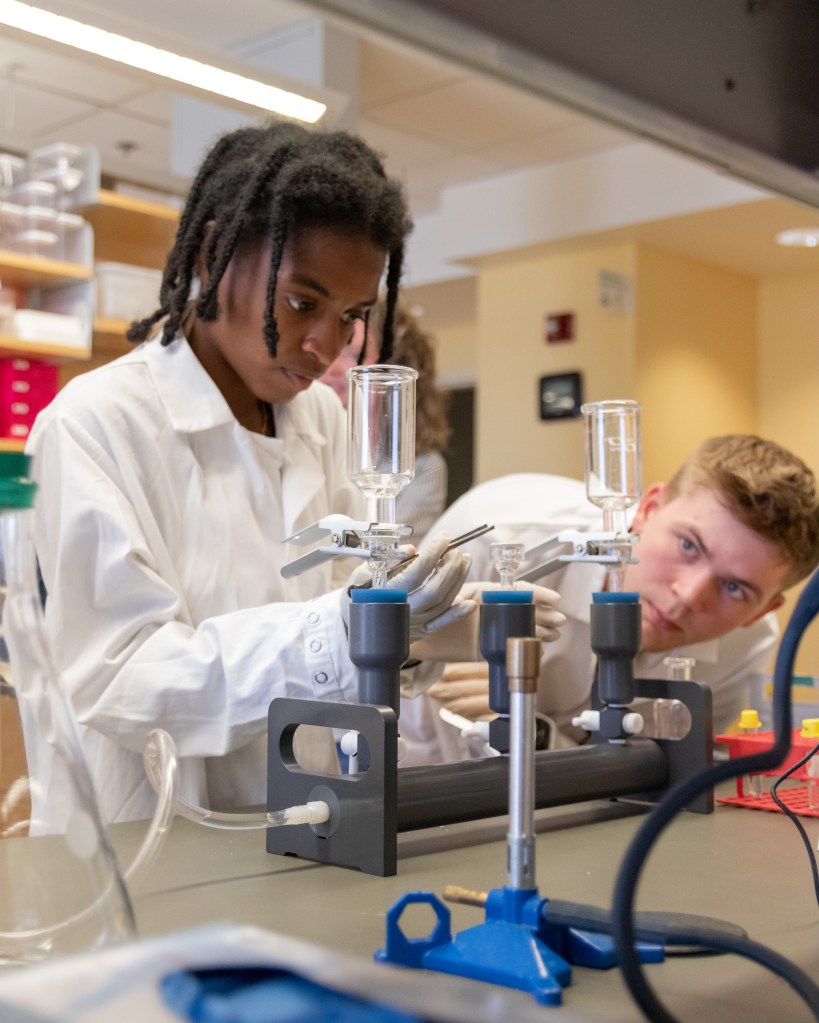
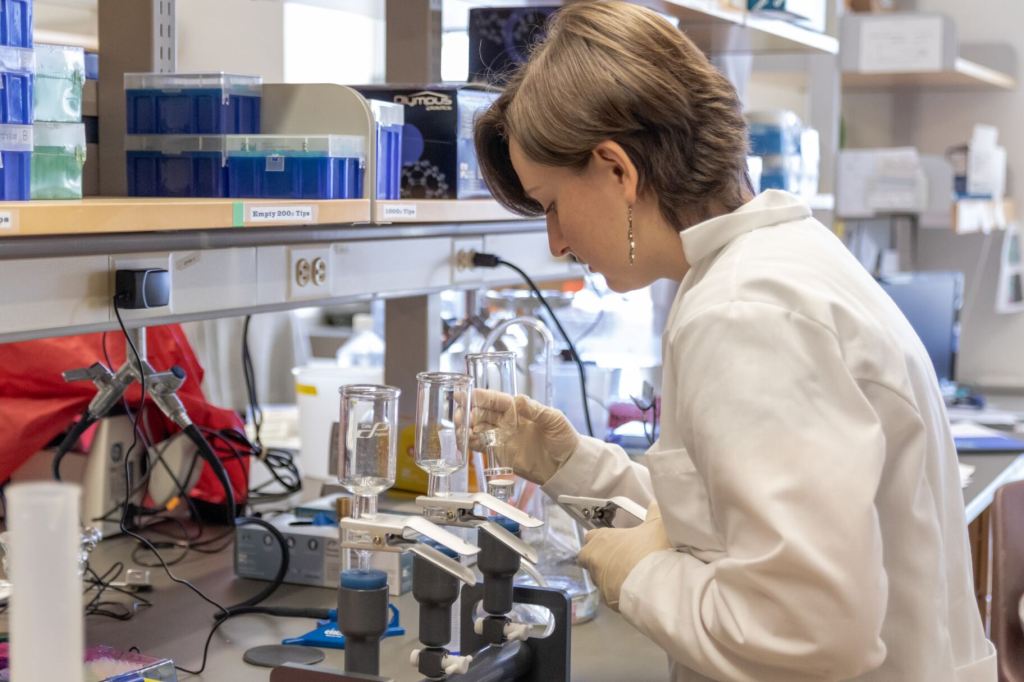
Students learn about core concepts and fundamental measurements in microbial oceanography. In the lab, students practice techniques like microbial spread & streak plating (to isolate marine bacteria from seawater) and chlorophyll sampling with a vacuum manifold (to quantify chlorophyll, a proxy for phytoplankton biomass in seawater), ..

A student spreading bacteria on an agar plate using an L-shaped spreader. She is wearing a lab coat and blue gloves. There are students in the background doing the same activity.
A student wearing a lab coat and blue gloves streaking out a bacterial sample on an agar plate.
A student using tweezers to remove a filter from a vacuum manifold. Another student closely observes.
A student removing the top portion of a vacuum manifold to access the filter underneath.

….so they are well prepared to conduct these approaches at sea.
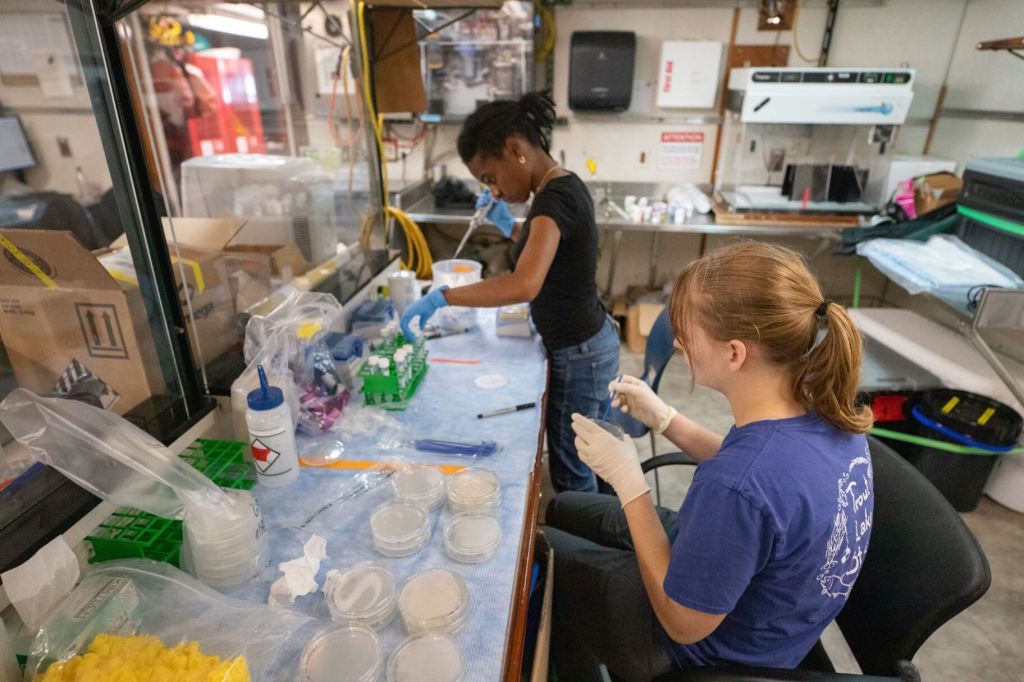
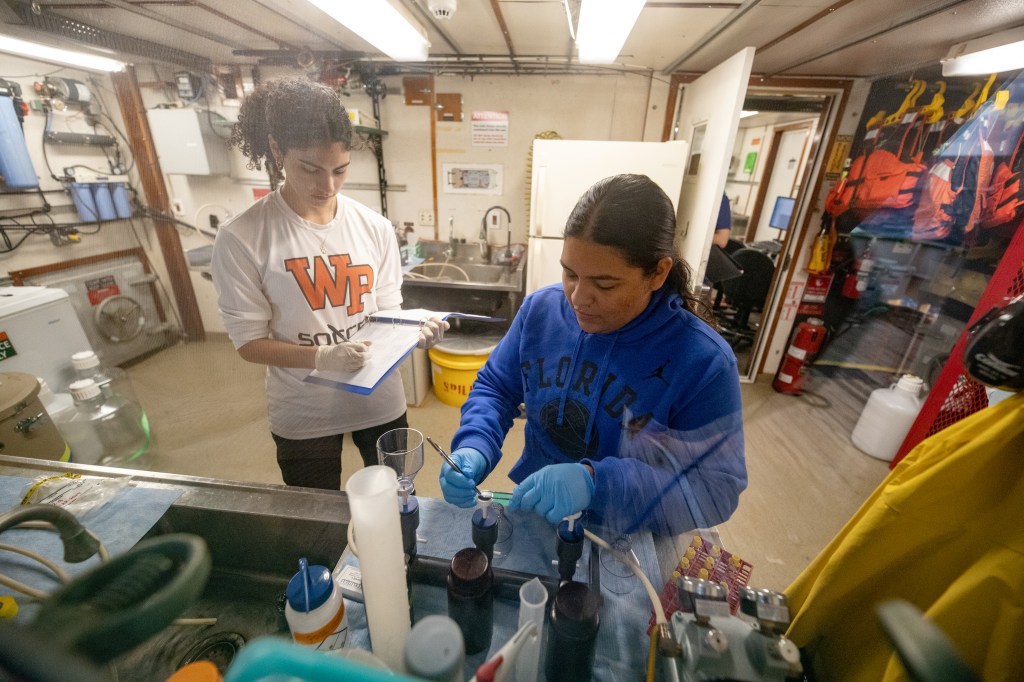
Two students in the wet lab of a ship diluting natural seawater samples and plating them on agar plates.
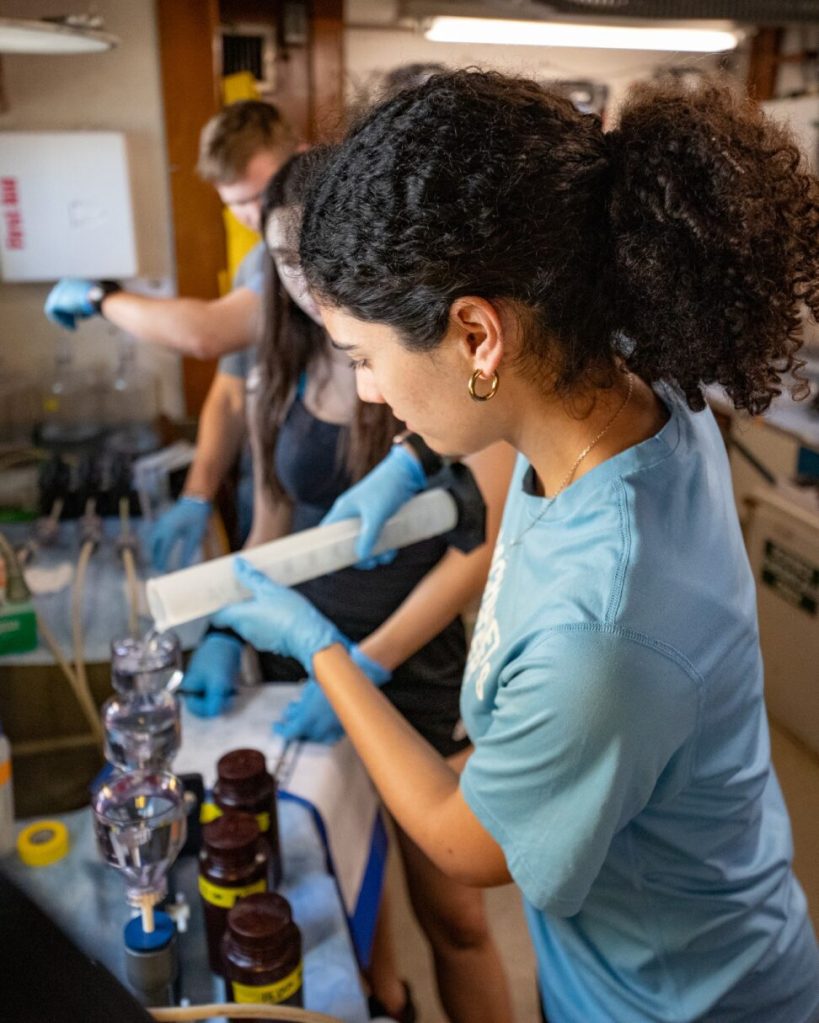
Two students in the wet lab of a ship working together to filter water samples for chlorophyll data collection.

Field training on a research vessel

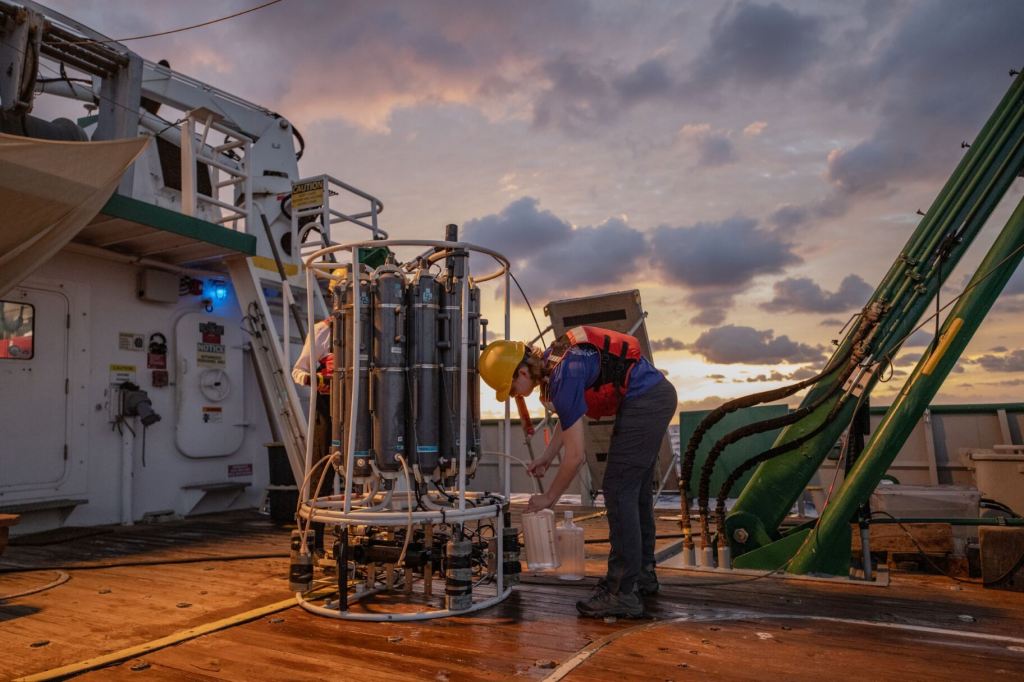
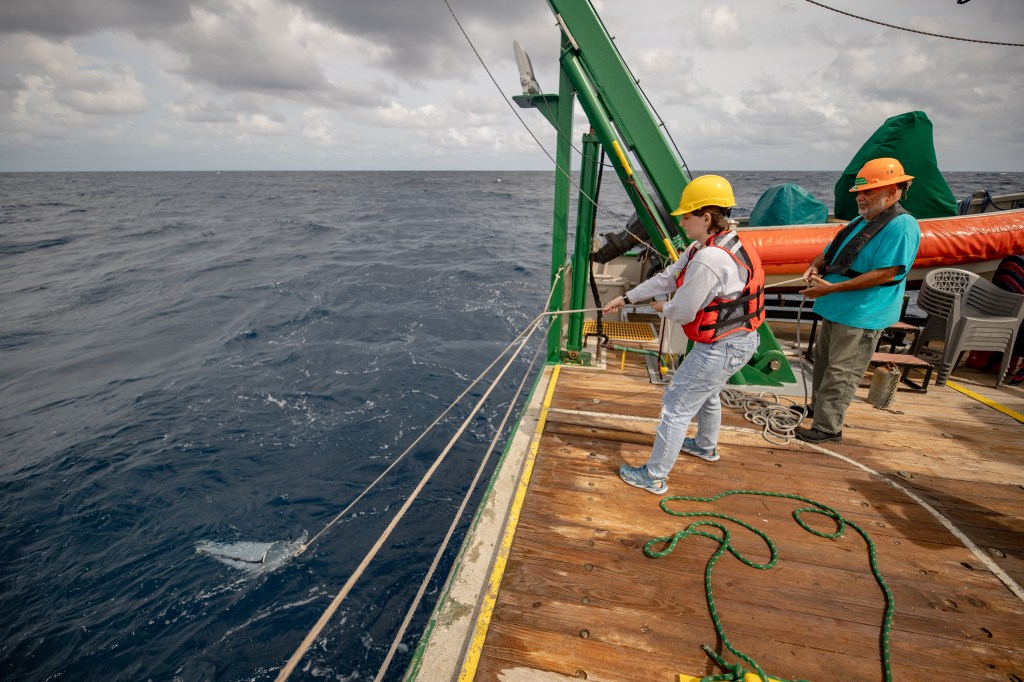
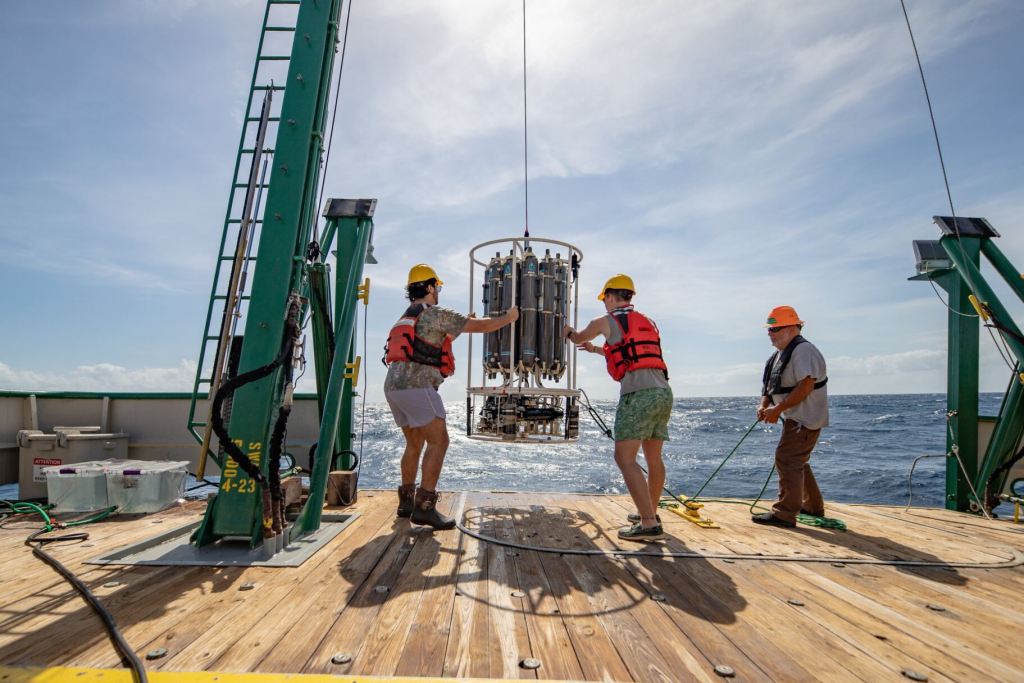
Students deploy instruments into the sea (e.g., CTD niskin rosette, plankton net), interpret data in real-time, collect samples for molecular and chemical analyses (back at UF), and learn to communicate and work as a team.
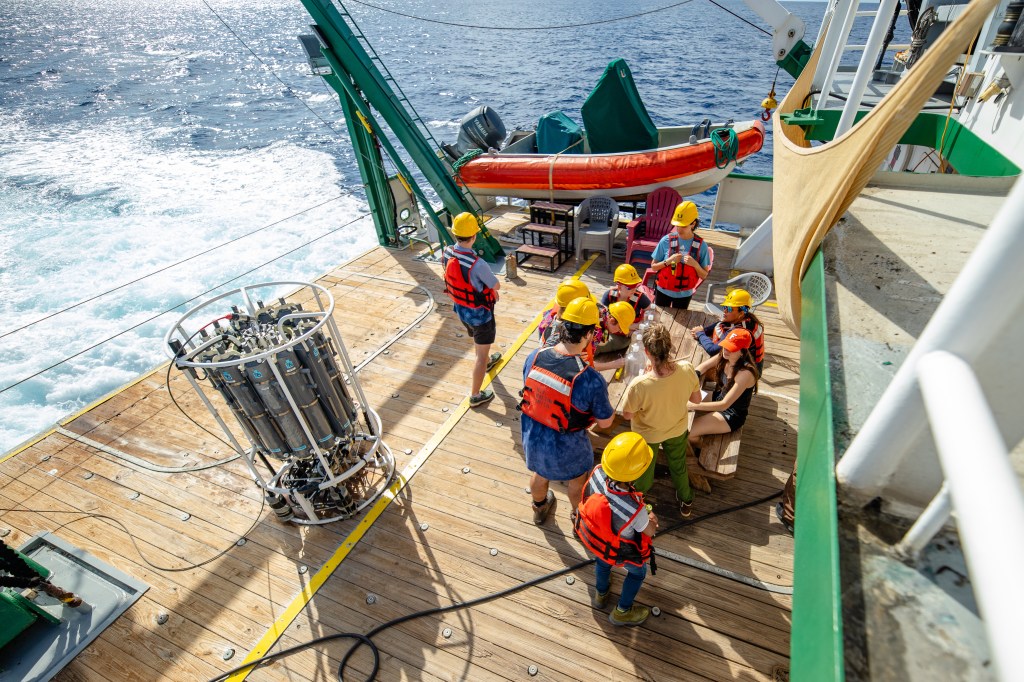
An overhead image of a team of students on the deck of a ship as they prepare to take samples from a Niskin rosette. They are wearing yellow hard hats and orange life vests.
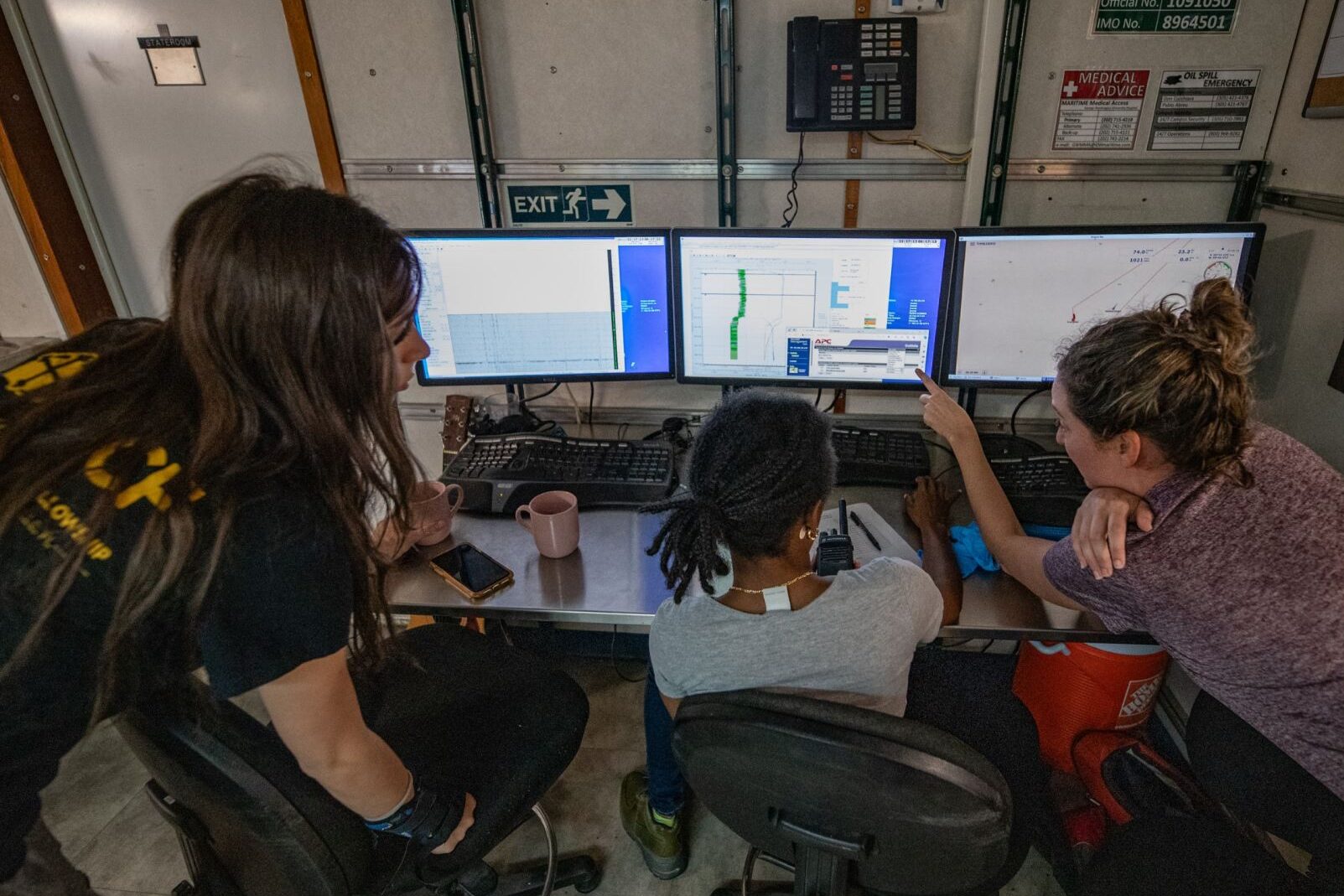
Two students and a research faculty observing computer screens. The faculty member is pointing to something on the screen.
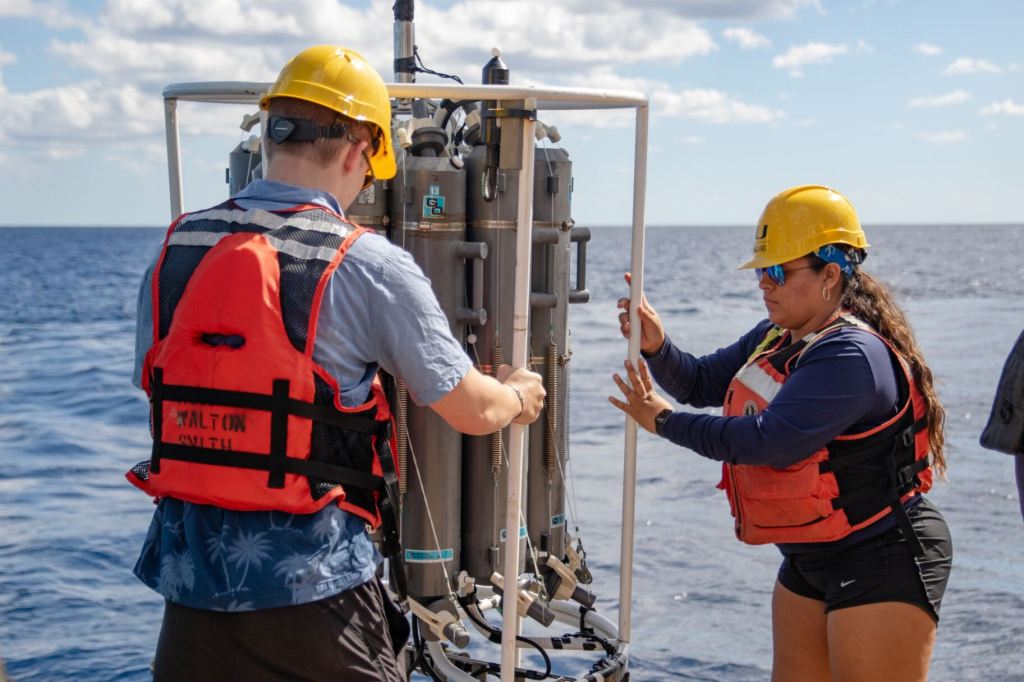
Two students handling a Niskin rosette as it is being deployed. They are wearing yellow hard hats and orange life vests.
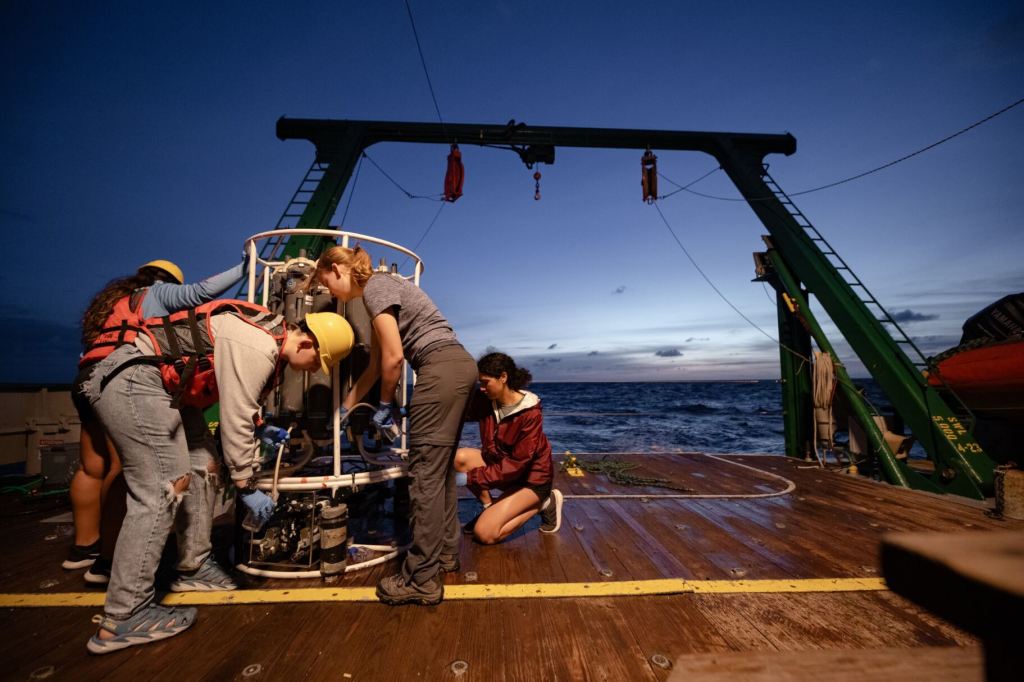
A low angle shot of four students collecting water from a Niskin rosette. The A-frame and sunrise is in the background.
A student using tweezers to place a filter onto a vacuum manifold.
A student collecting water from a Niskin bottle at sunrise
A student performing a plankton tow off the back of a ship.
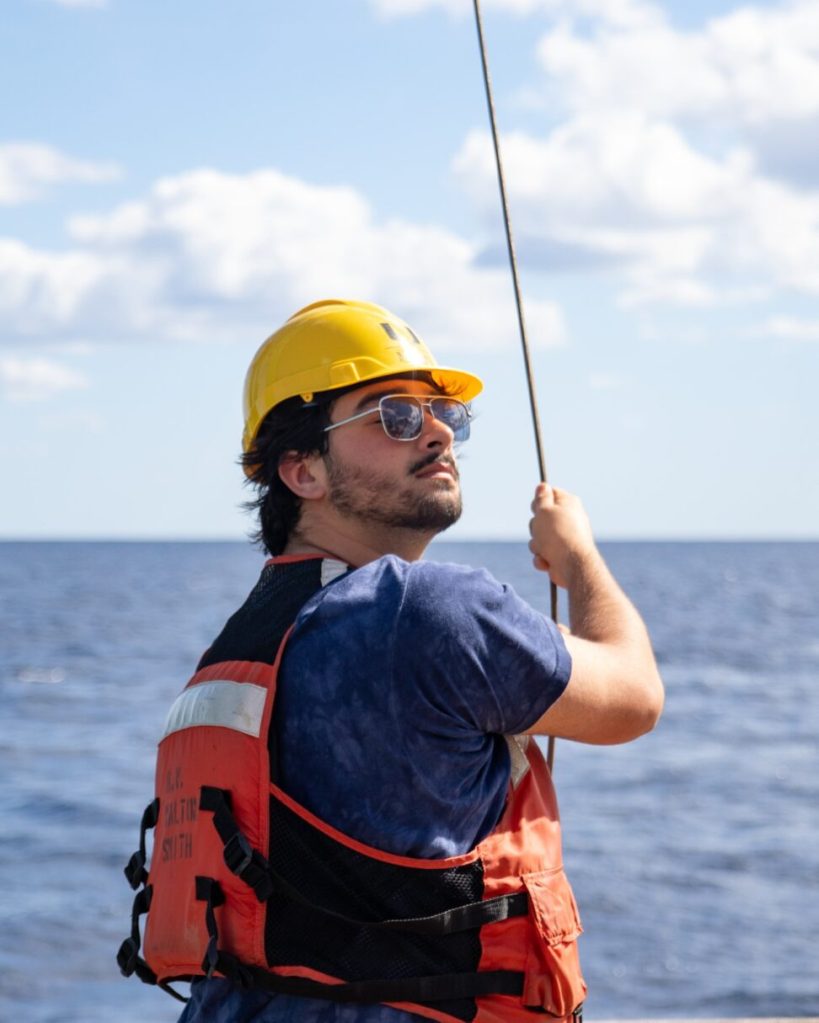
A student holding onto a cable during the deployment of oceanographic research equipment. He is wearing a yellow hard hat, orange life vest, and sunglasses.
A student pouring water into a vacuum manifold for filtration.
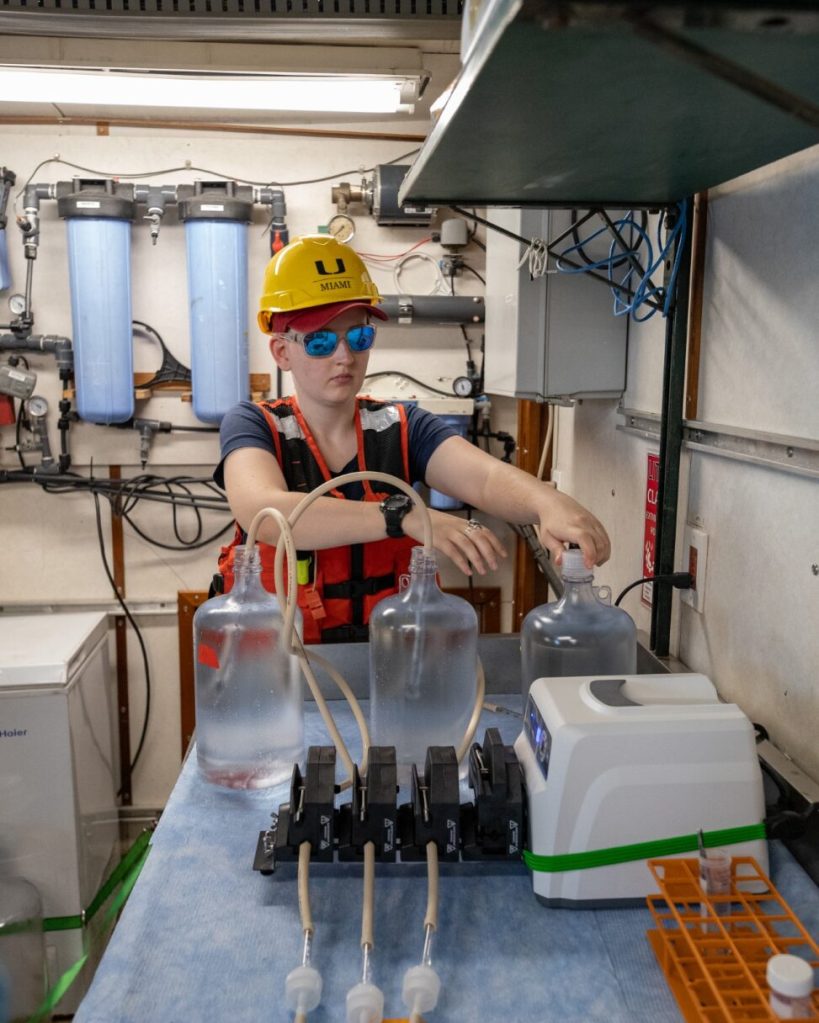
A student preparing three 4-liter bottles of seawater to be filtered simultaneously.
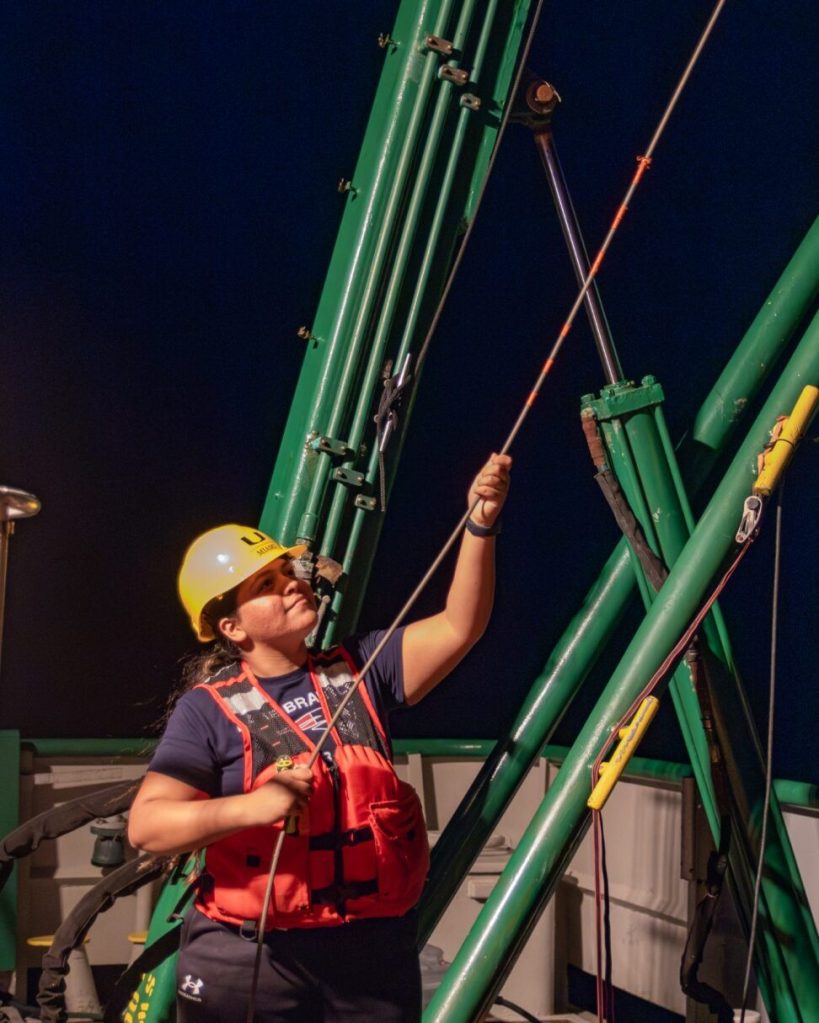
A student holding cable during the deployment of oceanographic equipment. She is wearing a yellow hard hat and orange life vest. It is dark outside.
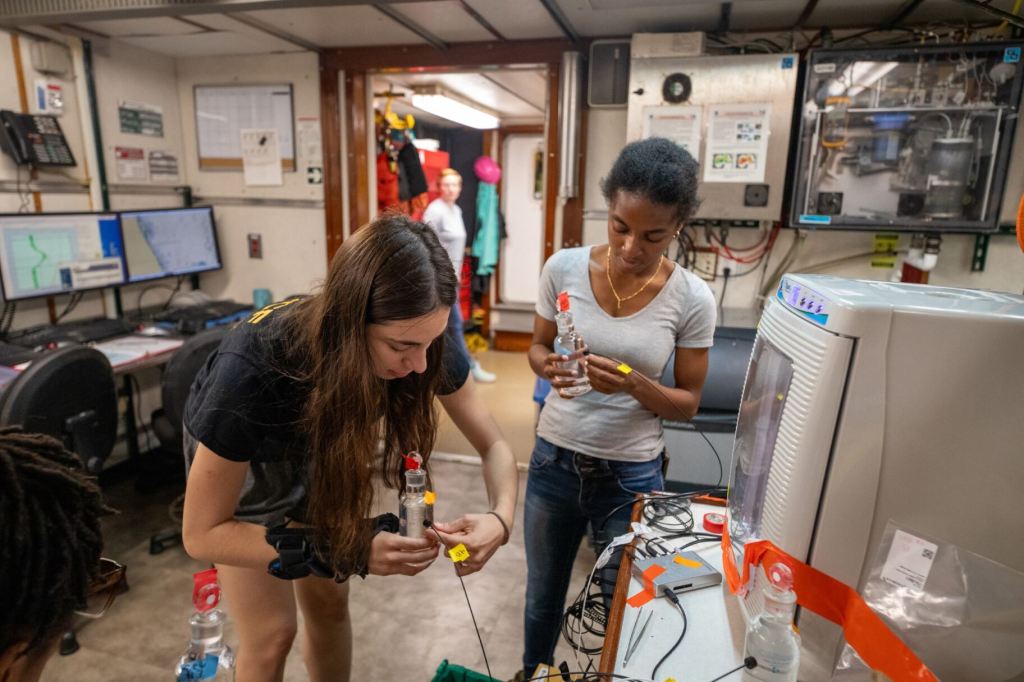
Two students putting sensors on bottles of water samples.
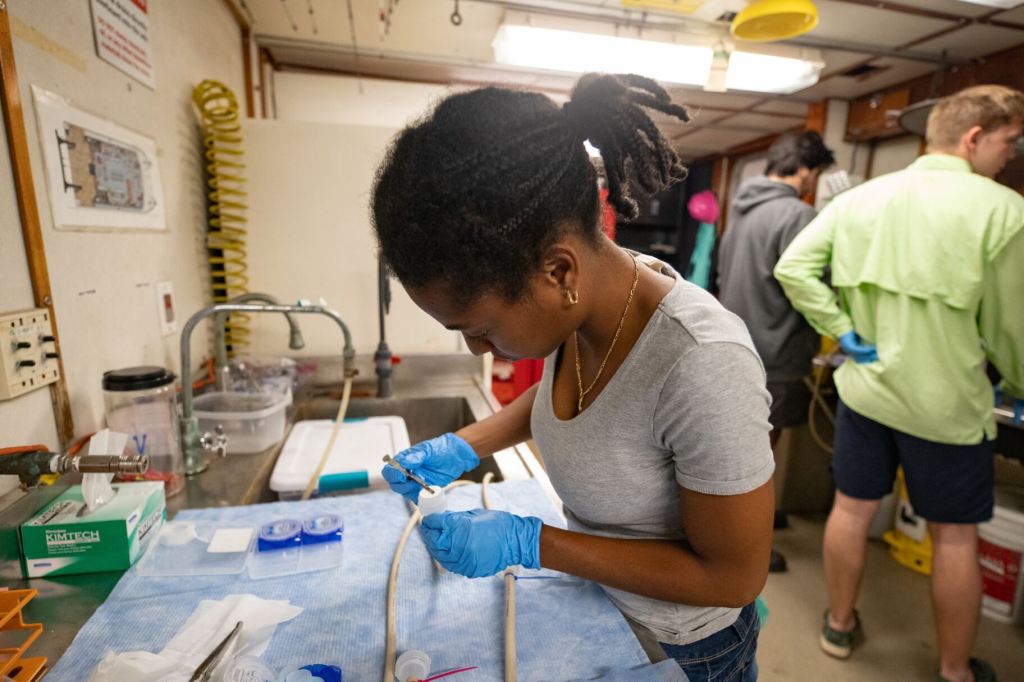
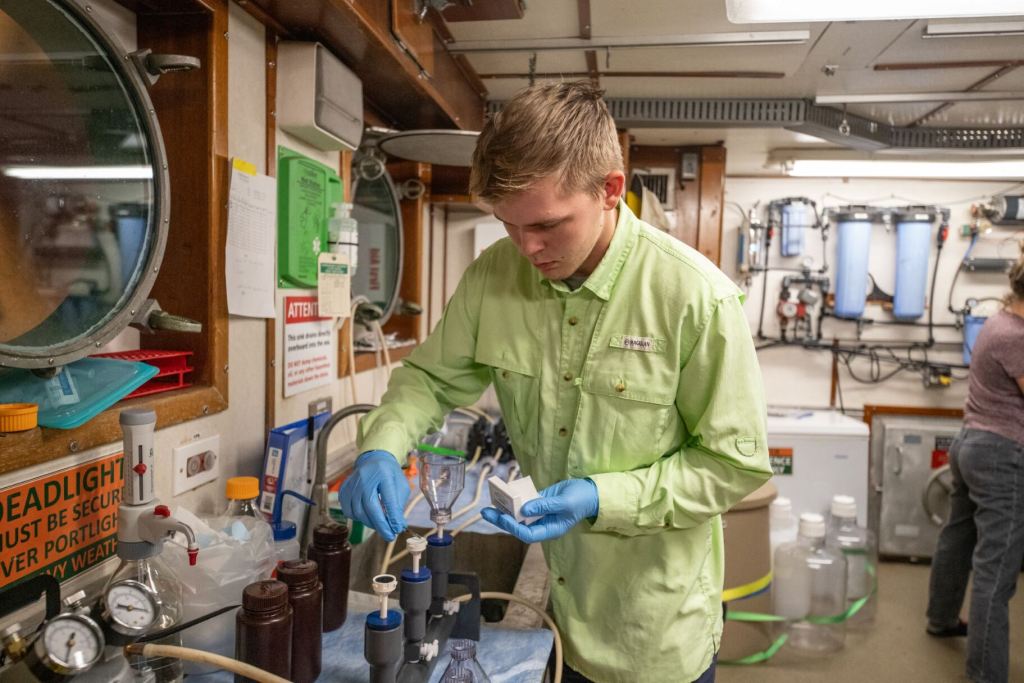
A student wearing a green shirt preparing a filtration setup for chlorophyll extraction.
A wide angle shot of two students handling a Niskin rosette as it is deployed into the water. A ship worker is holding the cable.
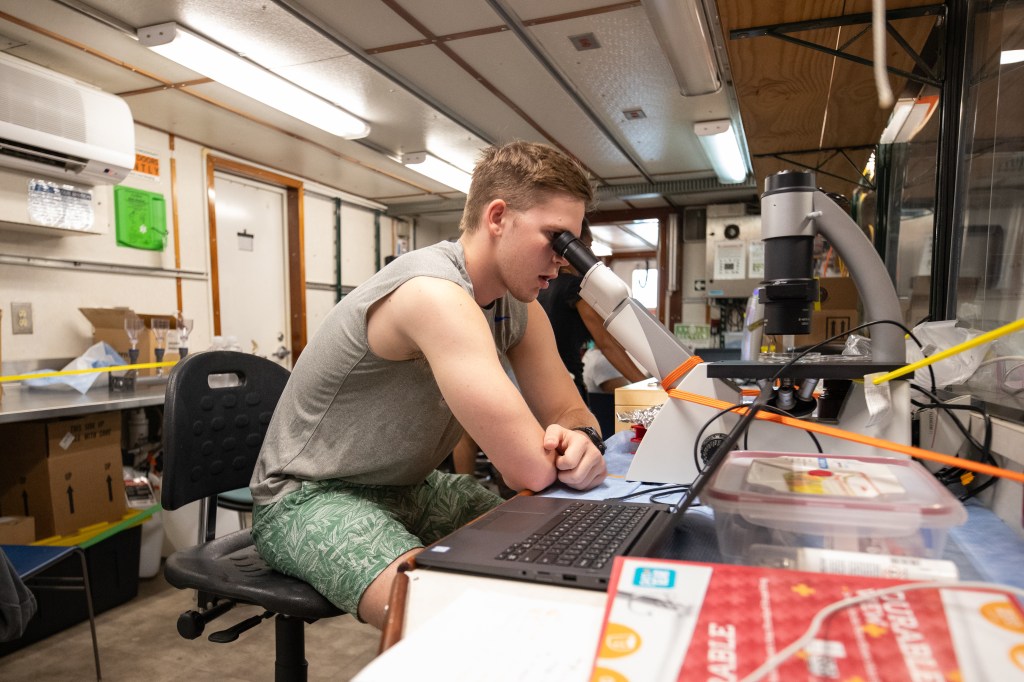
A student looking into a microscope.

Process samples, analyze data, and synthesize findings

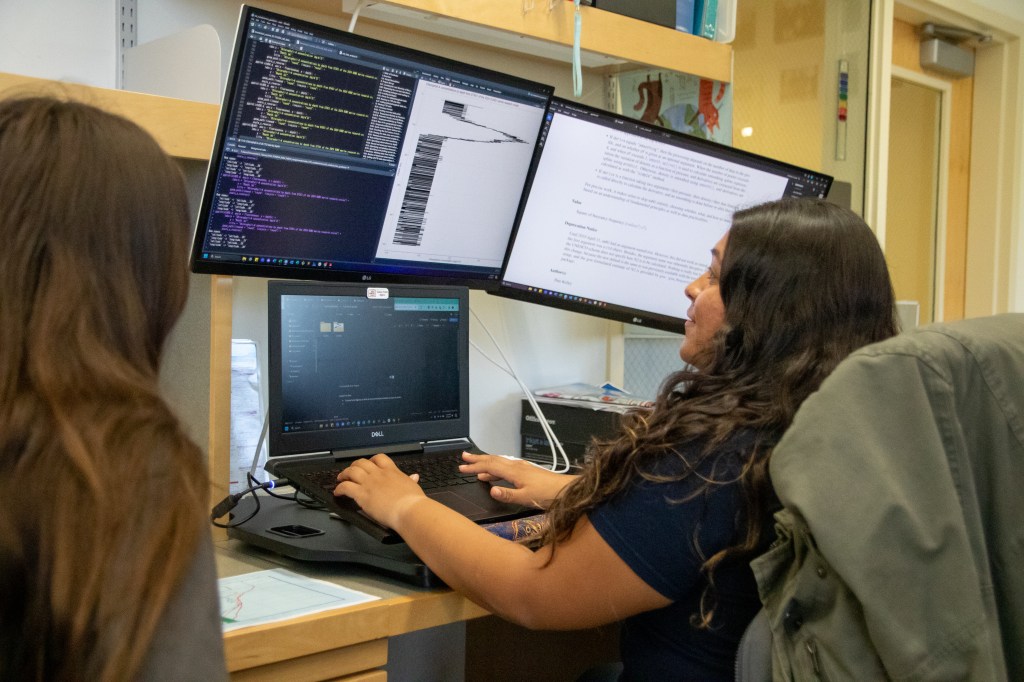
Back at UF, students work in small groups and/or independently to process their field samples and interpret their results. Data types may include sensor measurements from the CTD, microscopy images, culture isolate identifications, amplicon DNA sequences, HPLC chemical profiles, oxygen-based respiration rates, and carbon-based primary production rates.
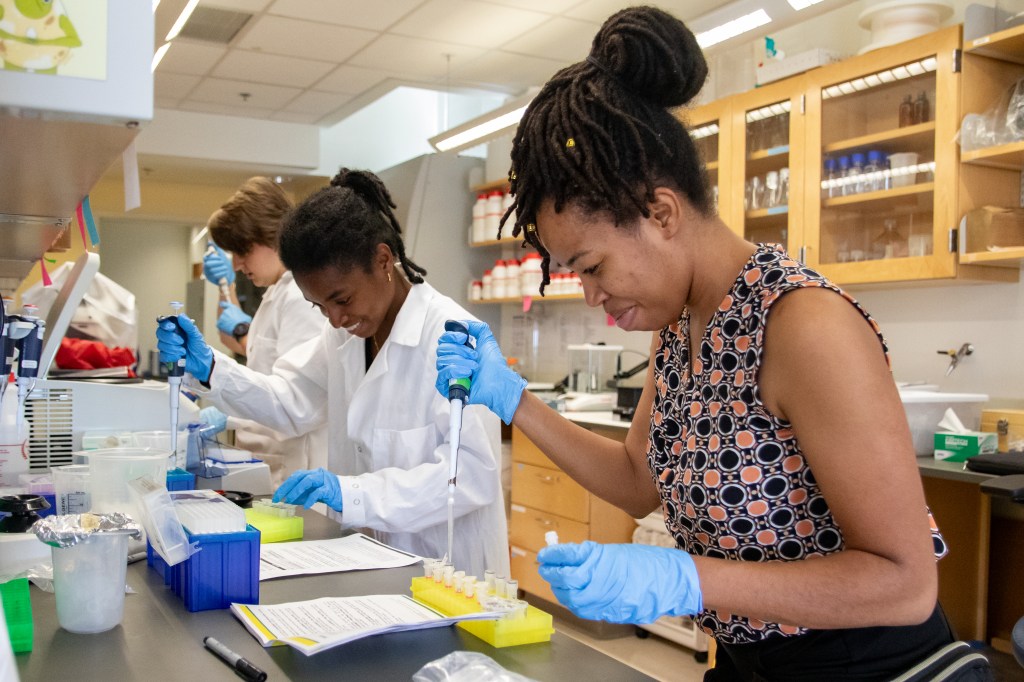
A Black postdoctoral researcher pipetting alongside a Black student. There are more students pipetting in the background.
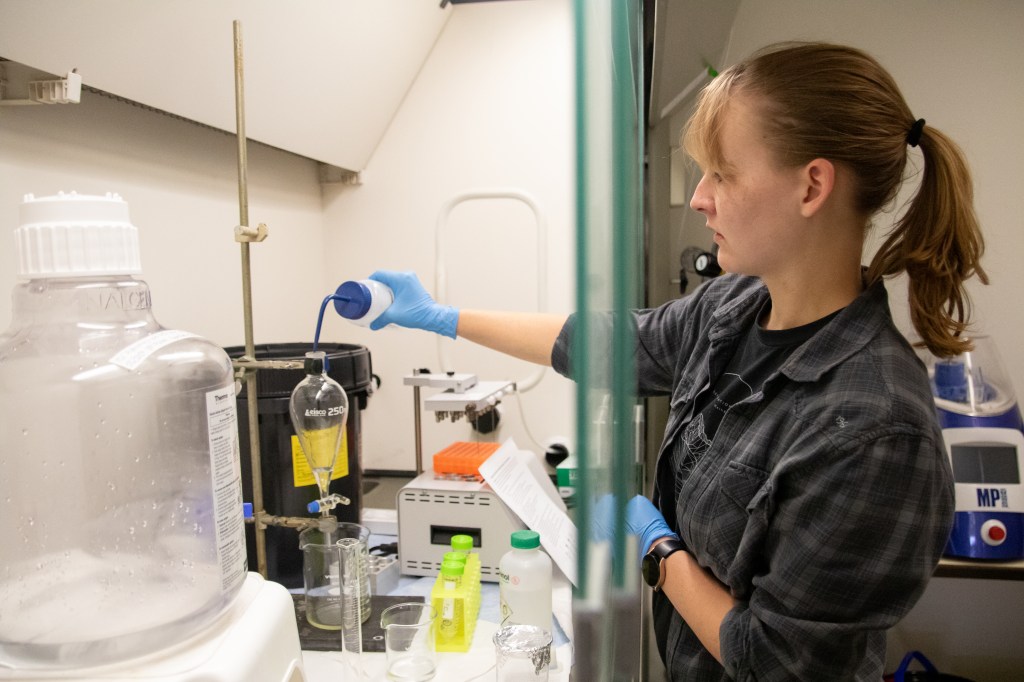
A student rinsing chemical glassware in a fume hood during an extraction.
A student working at a laptop looking at the connected dual screens.

All images c/o course Content Coordinator Lisa Coe